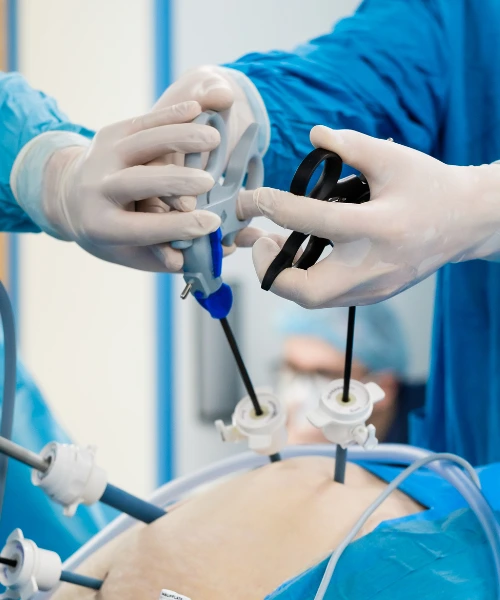
Laparoscopic Hernia Surgery at Radhika Women’s Care
A hernia occurs when an internal organ or tissue pushes through a weak spot in the abdominal wall, often causing visible bulges, pain, and discomfort—especially while bending, coughing, or lifting heavy objects. At Radhika Women’s Care, we offer laparoscopic hernia repair surgery, a safe, minimally invasive technique that provides long-lasting relief with faster healing and less pain.
In this procedure, small keyhole incisions are made, and a laparoscope (a thin camera) is used to guide the placement of a surgical mesh that reinforces the weakened area. This technique ensures minimal scarring, quicker recovery, and low recurrence rates, making it ideal for most types of hernias, including inguinal, umbilical, and incisional hernias.
Our skilled surgeons, modern equipment, and patient-centered care ensure a safe and comfortable surgical experience in a hygienic and supportive environment.
Benefits of Laparoscopic Hernia Surgery
Laparoscopic hernia repair offers several advantages over traditional open surgery. At Radhika Women’s Care, our patients benefit from:
Minimally Invasive: Performed through small incisions, resulting in faster healing and less tissue damage.
Less Post-Operative Pain: Reduced pain and discomfort compared to open surgery.
Quicker Recovery: Most patients return to daily activities within a few days.
Minimal Scarring: Cosmetic advantage with tiny, barely visible scars.
Lower Risk of Infection: Small incisions reduce the chance of surgical-site infections.
Low Recurrence Rate: Placement of a surgical mesh strengthens the abdominal wall and prevents future hernias.
Outpatient Procedure: In most cases, patients are discharged the same day.
Post-Operative Care After
Laparoscopic Hernia Surgery
After surgery, following these care tips will support a smooth recovery:
Wound Care: Keep incision sites clean and dry. Avoid baths until wounds are healed.
Activity Guidelines: Light walking is encouraged. Avoid heavy lifting, gym workouts, and strenuous activity for 2–3 weeks.
Pain Management: Mild discomfort is normal. Take prescribed painkillers as advised.
Diet: Start with soft, easy-to-digest foods. Drink plenty of water to prevent constipation.
Support Belt (if recommended): May be advised to wear a hernia belt for a few days to support the abdominal muscles.
Follow-Up Visits: Attend scheduled check-ups to monitor healing and check mesh positioning.
Get an appointment
Get treatment for all your mental healthcare needs.
Consult our expert doctors for safe, effective, and personalized laser treatments. Your health and comfort are our priority at Radhika Women’s Care.
FAQ
Which hernias can be treated laparoscopically?
Most types, including inguinal, umbilical, incisional, and femoral hernias, can be treated with laparoscopic surgery. Your doctor will confirm suitability after evaluation.
Is laparoscopic surgery better than open hernia repair?
Yes, it involves less pain, faster recovery, smaller scars, and a quicker return to normal life, especially for bilateral or recurrent hernias.
How long does recovery take?
You can resume light activities within 2–3 days. Complete healing typically takes 1–2 weeks.
Will the hernia come back?
Hernia recurrence is rare with laparoscopic repair, especially when lifestyle advice is followed and the mesh is placed correctly.
Is it a daycare procedure?
Yes, in most cases, patients go home the same day after observation.